
Introduction
Contradictions between different blocs of countries are currently becoming more and more acute, which can be conditionally considered as a global West/Non–West opposition. The most striking manifestations of such contradictions were the special military operation of Russia in Ukraine, which began in 2022, and the joint special operation of Israel and the United States against Iran, carried out in 2025. At the same time, in both cases, the West proved powerless to change the political regimes of Russia and Iran, and also failed to achieve a clear military advantage in the resulting clashes. At the same time, there is a destructive escalation of Russophobia in European countries, as well as an increase in militancy among European political leaders. Other dangerous regional conflicts are also emerging, such as military clashes in 2025 between India and Pakistan, Thailand and Cambodia. All this poses a danger to the continued existence of the planet due to the loss of the basic adequacy of the political leadership of most Western countries. The desire of the Collective West to preserve its civilizational hegemony against the background of a chronic inability to achieve this is turning into the main geopolitical agenda of our time.
Against this background, Western countries have entered a stage of visual cultural degradation, when world cultural achievements are canceled for political reasons – some works in the field of literature, music, science, etc. are banned. The best scientific and educational centers of the West are gradually losing their status as global zones of attraction for the intellectuals of the planet. All this speaks to a kind of passionate crisis in the West, which raises many new scientific questions and analytical problems. One of the obvious and main methodological tasks is to understand the mechanism and driving forces of the process of passion fading in Western countries. In this sense, E. Todd’s book (Todd, 2025) can be considered a landmark, which sheds light on the process of civilizational weakening of the West. The aim of the article is to reveal more fully the mechanism of the extinction of the passionate impulse of nations and related heterogeneous groups of factors. We will carry out a synthesis of existing ideas about the origin and weakening of a particular nation, statehood, or even an entire civilization for implementing the aim. Solving this problem will make it possible to add a missing and at the same time very important link to the modern theory of passionarity, which in recent years has been actively being formed almost from scratch.
Fundamentals of the concept of passionarity: overviewing the main ideas
The concept of passionarity was proposed by L.N. Gumilev in the second half of the 20th century (Gumilev, 2016) and almost immediately caused a wave of criticism. This result can be considered quite natural due to the fact that Gumilev himself completely incorrectly revealed the nature and origins of passionarity, focusing on natural rather than social factors. After that, the concept remained in oblivion for a long time, although the very concept of passionarity as the amount of vital energy available in an ethnic system began to be widely used in the analysis of social processes. However, in the 21st century, the concept of passionarity began to gain popularity again as a kind of interdisciplinary structure that allows reaching a new level of understanding reality (Pustovit, Shlapak, 2013; Ermolenko, 2016).
A. Toynbee’s earlier ideas concerning the mechanism of the start of passionarity according to the “Challenge–Response” model are directly related to the theory of passionarity: any significant historical phenomenon is a reaction of the state and nation to existential export from the outside world (Toynbee, 2011). It is dangerous events that stimulate the unification of large groups of people and cause their coordinated actions with high intensity. However, a significant historical event represents an ethnic group’s response that not only provides it with simple self–preservation, but also takes it to a new level of social evolution. This circumstance was subsequently considered in detail by N. Taleb, who clarified the social anatomy of the evolutionary leap (Taleb, 2014). According to his understanding, social systems have the ability to improve themselves (to increase their functionality relative to the initial state) under the influence of adverse circumstances. This ability is based on the effect of hypercompensation (hyperreaction), when the system more than compensates for the damage caused to it by the initial stress (Taleb, 2014, pp. 73–75). Thus, the idea of hypercompensation turned out to be very consonant with the concept of passionarity, but Taleb did not disclose which hidden reserves provided the effect of hypercompensation. Somewhat later, the mechanism of hypercompensation and its main phases were revealed in the most general form in the work (Balatsky, 2015).
The latter circumstance led to the emergence of a structural model of evolutionary leap that revealed the mechanism of passionarity (Balatsky, 2022). The sequence of this mechanism includes several stages: the warm–up period, when a cascade of external or internal stressors (challenges) occurs, reducing the system functionality and causing the primary problems of the social system; the reflection period, during which an inventory of all the system’s capabilities, shortcomings and hidden reserves takes place; the training period, when the resources of the system are being mobilized in vital areas; the period of innovation (reform), when the system is being rebuilt based on a new organizational model. The implementation of the full cycle of these four stages ensures the emergence of the hypercompensation effect or, in other words, the passionate explosion of the nation. The model of the evolutionary leap incorporated the concept of the passionarity of the nation by L.N. Gumilev, the effect of hypercompensation by N. Taleb, the Challenge–Response model by A. Toynbee, and the organizational effects of systems theory. Thus, this model synthesizes previous ideas and approaches. We can argue that the emergence of the evolutionary leap model has removed the mystical taint from the concept of passionarity, introducing it into the mainstream of understandable and operational scientific concepts.
Among other things, the evolutionary leap model introduced the concept of passionarity into the mainstream of traditional concepts of economics. For this purpose, based on the ideas of A. Schopenhauer, it is assumed that the historical work of an ethnic group (civilization) manifests itself in the totality of its deeds (geographical discoveries, wars of conquest and defense, acts of self–sacrifice, etc.) and creations (sculptures and paintings, musical works by composers, books by philosophers and writers, discoveries by scientists, etc.) (Schopenhauer, 2011, p. 86). This allows a more constructive approach to the concept of the passionate tension of an ethnic group, i.e. its specific passionarity (Gumilev, 2016, p. 283). Thus, passionarity is nothing more than a surge in the economic efficiency of a nation, i.e. its specific impact in terms of creative activity (Balatsky, 2022). The concept of efficiency definitely conceals some extreme passionate achievements – the qualitative content of great creations and deeds, the sacrifice of deeds, and so on. However, this is only a temporary problem of accounting for such complex phenomena. The main thing is that the events of modern history also fall under this concept. For example, the rise of the USSR in the first decades of its existence can be attributed to a typical manifestation of a passionate impulse. The same category includes the “economic miracle” of post–war Japan, and later South Korea, Singapore, Taiwan, and now China.
We should note that there was an ambivalent attitude toward the concept of passionarity until 2022: on the one hand, the concept itself – and even more so a full–fledged theory – was absent, and its apologetic arrangements were not recognized; on the other hand, the concepts of passionarity and the cycle of passionarity were actively used as working scientific categories. After 2022, the theory of passionarity receives an organizational, economic and systemic cybernetic justification, turning into a full–fledged analytical construct that can be integrated into the general theory of social development. At the same time, it becomes clear that the theory of passionarity is a direction within a large interdisciplinary branch of knowledge – the theory of social evolution.
At the same time, the structural model of the evolutionary leap did not close all the issues with the concept of passionarity, but only provided a convenient analytical template for considering other phenomena related to the development of states. To turn the leap model into a full–fledged theory, its further development was required, which was done in subsequent years. For example, in the work (Ekimova, 2024), a peculiar superimposition of the theory of elites was performed on the structural model of the leap, which made it possible to establish the following important pattern: at the last stage of the implementation of the passionate impulse, a fork occurs depending on the nature of the elites, which can be both national (i.e. defending the national interests of the country) and supranational (i.e. e. defending their own supranational interests). Depending on which elites are forming in the country by the time of the reforms, the very possibility of a passionate explosion depends. With the dominance of supranational elites, the passionate scenario cannot be realized. This thesis has many vivid historical examples, including those from modern times (Ekimova, 2024).
An important innovation of the theory of elites was the work (Turchin, 2024), where the author introduced the concepts of ruling elites and counter–elites, between which in certain periods of time there is an irreconcilable struggle with the desire for mutual extermination; as a result of the intra–elite struggle, the ruling class and its policies change. The article (Balatsky, 2024a) noted that such a process redefines the accents of the concept of passionarity: as it turns out, the very property of people’s passionarity rises from bottom to top – from the masses to the elites, sublimates and accumulates there, and then manifests itself through intra–elite struggle in political reforms. The logical development of this idea was carried out in the work (Volkonskii, 2024), where the conjugation of elites and masses is considered due to the mechanism of projecting the property of elite passionarity from top to bottom – into the masses – through ideology. It is the representatives of the ruling elites who develop an ideology, protect it from hostile influences, and “charge” society with it, after which certain ideas take hold of the masses and become an independent driving force. In this sense, the unity of the elites should also be observed at the stage of consolidation of society.
Further development of these ideas was carried out in an article (Volkonskii, 2025), which examines the structure of the ruling elites in terms of their polar properties – passionarity and conservatism. It is the dominance of one of these properties among the representatives of the ruling class that determines the ways of society’s development – from stagnation to reform. Moreover, passionarity does not always have a positive connotation, and conservatism has a negative one. For example, when reforms are required and the elites are overly conservative, stagnation occurs, even to the point of destruction of statehood itself.; if stability is required, and the elites carry out excessive and unnecessary transformations, then social overstrain occurs in the system with all the negative consequences that follow from this. Thus, a passionate explosion occurs when the demand for reforms coincides with the supply of their carriers.
All these works have led to a fundamental enrichment of the theory of passionarity, when instead of a homogeneous nation (ethnos), which Gumilev spoke about, there are masses and elites with their mutual connections. And this period of development demonstrates that the theory of passionarity is turning into one of the directions of the theory of elites. Moreover, passionarity itself arises as a result of the extremely effective coupling of the masses and the elites.
These works have largely formed the core of the modern theory of passionarity. However, they all focus on the birth and spread of passionarity, whereas the symmetry of the passion cycle requires an explanation of the reverse process – the extinction of passionarity. This trend, explicitly or implicitly, has been considered mainly in the works of historians. For example, O. Spengler developed the concept of the cyclical development of culture, which explains the ups and downs of different civilizations (Spengler, 2024). For him, culture and civilization are synonymous with the concept of life, for which, in turn, such phenomena as fate, rhythm, tonality, etc. are important (Yakimova, 2016). The consequence of the downward trend in culture is the notorious “decline of the West”.
It is not surprising that the history of Ancient Rome, which has been studied as well as possible by historians, has become the main testing ground for considering the ideas of civilizational cyclicity. In this regard, T. Mommsen’s theory of the historical cycle, which he used when considering the history of ancient Roman civilization, is very characteristic (Mommsen, 2025). In later works, Mommsen’s mechanistic approach to the gradation of phases of the historical cycle is rightly noted, when the tsarist, republican and imperial periods are associated with the dominance of certain elite strata. It is noteworthy that Mommsen believed that the entire imperial period represented the decline of the civilization of Ancient Rome.
An even more monumental work dedicated exclusively to the decline of ancient Roman civilization is presented by E. Gibbon (Gibbon, 1997). However, even in this case, the author gives a sporadic set of reasons for the decline and collapse of the Roman Empire, with internal reasons dominating the description of the decline of the Western Roman Empire, while external ones predominate in the description of the decline of the Eastern Roman Empire. Moreover, Gibbon believed that the fall of Rome went on throughout the entire imperial period of its existence and lasted for another millennium in the Byzantine Empire [1]. Thus, the period of decline can be extremely long, which allows taking a fresh look at the problem of the passion cycle. Another noteworthy fact is the link between the fall of the Roman Empire and the development of a new religious teaching, Christianity (Shuvalov, 2019). We will show below that in E. Todd’s concept (Todd, 2025), on the contrary, it was the disappearance of Christianity that caused the civilizational defeat of the modern West. Thus, religious movements can be a source of both the rise and fall of passionarity.
Despite the existence of a detailed chronology of the collapse of a particular civilization and related events, we do not have a more or less adequate theory of this process. It is clear that the mechanism of the fall of different civilizations and states is uniform, associated with the extinction of passion, but it turns out to be indistinguishable behind the accumulation of private facts. It should be recognized that E. Todd’s demographic concept, proposed in his landmark book (Todd, 2025), makes a great contribution to the theory of passionarity and, in particular, to the explanation of the extinction of passion movements. He showed that the disintegration of the traditional family model and the religious and ethical code of conduct inevitably lead to the development of anti–racist tendencies with the gradual degradation of the entire nation and its underlying statehood. However, to be fair, we should say that Todd did not set out to create a theory of passionarity, and therefore we will not find it in his finished form. Nevertheless, the material available in his work allows developing the author’s ideas and come close to creating a theory of the extinction of passionarity, which is the aim of this article.
Self–identification and consolidation of the nation: three drivers of passionarity
Based on E. Todd’s ideas, we will consider three main elements of self–identification and subsequent consolidation of the nation: an ethical code of conduct, a traditional family model and a common language. The fact is that these three aspects of social life form the basis of any social community. At the same time, Todd examines in more detail the dynamics of his code of ethics, which is religious and ethical and varies depending on the religious denomination. He identifies three stages of the formation and destruction of the ethical code: the active phase, when all norms are fulfilled in their original form and give a positive result, the zombie phase, when a significant part of religious norms are dying out, but some basic rituals are still in effect due to inertia, and the null phase, when almost all norms and rituals disappear. Table 1 presents a detailed description of these stages for the Code of ethics is given in.
Table 1. Evolution of the Institute of Ethical Standards
|
Phase |
Active |
Zombie |
Null |
|
Essence and signs |
Religious faith, performing rituals, and observing ethical standards |
Loss of faith, inertia in performing certain rituals, and non–compliance with all ethical standards |
Loss of faith, rejection of rituals, non–compliance with most ethical standards |
|
Manifestations and markers |
Prayer practice, regular attendance at services in temples, traditional burial of the dead |
Abandonment of the practice of prayer, observance of certain rituals (baptism of newborns, wedding of newlyweds, funeral service of the dead), beginning of the spread of cremation |
Renunciation of prayer, renunciation of rituals, mass cremation of the dead, legitimation of same–gender marriages |
|
Meaning and effects |
Presence of collectivism and empathy in people, curiosity, desire for knowledge (education), diligence, responsibility, curbing consumption (asceticism), spread of meritocracy |
Increased selfishness, weakening empathy, rejection of asceticism, perception of education and work as a forced duty, spread of oligarchy |
Triumph of selfishness and individualism, loss of collectivism, hedonism, antipathy to education and work, irresponsibility |
|
According to: (Todd, 2025). |
|||
Todd quite rightly believes that the gradual decline of religiosity as such leads to the loss of the ethical principle that it carried from the very beginning. It is not surprising that in its final phase, society comes to total immorality, which is only a form of rabid selfishness and lack of faith. Thus, religious faith, initially acting as a form of uniting people, is gradually fading away, and with it the consolidation of the nation and its positive qualities are disappearing, which marks the first step towards the collapse of national identity and the civilization generated by it.
The second element of Todd’s passionarity is the traditional institution of the family, in relation to which it is legitimate to apply the same periodization as for the code of ethics. Table 2 shows a detailed description of the three stages of the formation and decomposition of the family institution.
Table 2. Evolution of the family institution
|
Phase |
Active |
Zombie |
Null |
|
Essence and signs |
Presence of a traditional (extended) family model (family and gender) |
Predominance of the traditional nuclear family |
Widespread civil marriages and same– gender families |
|
Manifestations and markers |
Living under the same roof of several generations and families (common house in the village), the primacy of the eldest member of the family (patriarchy), common household and joint work in it, equal rights of heirs, legal (marriage) and religious (wedding) legitimization of the family |
Living as separate nuclear families (apartment buildings), the development of a tendency to abandon the care of children and the elderly (the emergence of orphanages and nursing homes), inequality in inheritance, the massive rejection of religious legitimation of marriage (wedding) |
Temporary cohabitation of couples and refusal to formalize the family (marriage), growth of divorces, final differentiation of generations (the massive spread of orphanages and nursing homes, spouses and children living in different rooms), spontaneous inheritance, widespread single–parent and same–gender families |
|
Meaning and effects |
Developed sense of "friend or foe", mature collectivism, sacrifice for the benefit of loved ones |
Blurring of the "friend or foe" dichotomy, weakening of collectivism, indifference to relatives (not members of the nuclear family) |
Loss of a sense of "friend or foe", pronounced selfishness and individualism, indifference to members of one's own (nuclear) family |
|
According to: (Todd, 2025). |
|||
In fact, the institution of the family is the primary practice for a person in relation to the formation of such properties as the feeling of an elbow, love for one’s neighbor, mutual assistance, sacrifice, etc. As the traditional family degenerates, all these elements collapse in the sense that their range of action decreases. If a person feels nothing even for their blood relatives, then their genetic basis for uniting with strangers disappears. In this state, the nation naturally disintegrates and loses its original integrity and passionarity.
It is characteristic that modern research convincingly shows that cohabitation is not a special modern form of marriage, but an “intermediate” social institution between loneliness and legal marriage. The decrease in the number of legal marriages and the spread of cohabitation does not lead to the modernization of the family, but to its weakening, when its key functions (reproduction of the population, raising children and providing psychological comfort for family members) are performed worse and worse (Sinelnikov, 2018). Another aspect of the problem is also interesting – there are no natural demographic mechanisms of self–regulation to protect against natural population decline (depopulation) (Sinelnikov, 2019). In other words, if a social system has entered a depopulation regime, then without special measures from the state it will be unable to get out of it, which threatens the death of the state and the nation itself.
The third institution, which Todd did not consider, but requires mandatory consideration, is the cognitive basis of civilization in the form of a common language. This factor is no less important than the first two. Considering that thinking and language in modern science are perceived almost as synonyms due to their absolute inseparability (Wilson, 2005), the language itself acts as the basis of the nation’s creativity, its ability to creative activity. It is also possible to create a matrix for the Institute of national language for the three stages of its existence (Tab.3).
Table 3. Evolution of the National Language Institute
|
Phase |
Active |
Zombie |
Null |
|
Essence and signs |
Canonical Unified Language |
Distribution of dialects and varieties of the source language |
Spread of subcultural languages (social groups), slang, borrowings from other languages, impoverishment of the native language, loss of standards in pronunciation and spelling |
|
Manifestations and markers |
Relative linguistic homogeneity of the nation, commonality of the mother tongue for elites and masses, primacy of the mother tongue, outstanding literary works |
Spread of a multi–level language (for different social groups and peoples), different language preferences among the masses and elites, coexistence of native and foreign (global) languages, absence of masterpieces of native literature |
Difficulties in communication between different segments of the population, primitivization (impoverishment) of the native language, fading culture of reading and writing, spread of a foreign (global) language among the masses |
|
Meaning and effects |
Pursuit of knowledge (reading and education), people’s creativity, success in science and culture |
Indifference to knowledge, low creativity of individuals, stagnation in science and culture |
Apathy toward knowledge, total ignorance, lack of creativity and creativity among people, degradation of science and culture (prohibition of certain works and authors in music and literature) |
|
Source: own compilation. |
|||
As for the institutions of the family and ethical norms, Todd provided enough empirical illustrations regarding the current final stage of the existence of the West. For instance, the rejection of Sunday services by Westerners gradually, over several steps, led to the recognition of same–sex marriage by different countries at the legislative level, which directly contradicts the tenets of all Christian denominations (Catholicism, Protestantism and Orthodoxy): The Netherlands – 2011, Belgium – 2003, Spain and Canada – 2005, Sweden and Norway – 2009, Denmark – 2012, France – 2013, Great Britain – 2014, Germany and Finland – 2017, USA – 20042015 (depending on the state) (Todd, 2025, p. 134). Thus, the West’s rejection of the Christian religious and ethical code and the traditional family model took place. Todd proved no less the anomalous consequences of this nihilism. For example, Germany’s low birth rate is offset by an obsession with increasing industrial efficiency and accepting migrants. At the same time, the phenomenon of illegitimate births is spreading, the proportion of which in European countries ranges from 10 to 71% (Gurko, 2020).
The decline of traditional institutions has led to a decline in the intellectual level of nations. For example, the share of students studying engineering in the USA is 7.2%, in Japan – 18.5%, in France – 14.1%, while even in “backward” Russia this share is 23.4% (Todd, 2025, p. 43).
By 2020, whites were 33% likely to receive higher education in Britain, blacks 49%, Asians 55%, and Chinese 72% (Todd, 2025, p. 173). And in 2021, only 37% of doctors in the country were of local origin, and 63% were from other countries, of which 50% were from India and Pakistan (Todd, 2025, p. 176). Characteristically, the degradation affected not only the traditional white population, but also the Jewish diasporas. For example, in the USA, Harvard University went from 25% of Jews among academic staff in the 1990s to less than 10% today (Todd, 2025, p. 252). Among those who married before 1980, 18% of Jews were married to a non–Jew, and in the period 2010–2020 – 61% (Todd, 2025, p. 253). This is blurring Jewish communities in favor of more cosmopolitan marriages and behaviors.
The distortion of the basic norms in the West was also reflected in an increase in the proportion of cremations. For example, in Great Britain in 1888, this type of burial accounted for 0.01% of funerals, in 1939 – 3.5%, in 1947 – 10.5%, in 1960 – 34.7%, in 2021 – 78.4% (Todd, 2025, p. 187). At the same time, indifference toward offspring is clearly visible. Thus, in 2020, the U.S. infant mortality rate in the country was higher than in Russia – 5.4 versus 4.4 (Todd, 2025, p. 213). However, indifference to the next generation is coupled with indifference to one’s own health: in the United States, from 19902000 to 2017–2020. The share of overweight residents increased from 30.5% to 41.9% (Todd, 2025, p. 228).
The disappearance of empathy and national unity in the United States has led to the fact that, with deepening income inequality, elites ignore the interests of the masses (the majority), but at the same time diligently protect the interests of minorities. In the USA, the Gini index was 0.454 in 1990, 0,470 in 2006, and 0.494 in 2021 (Todd, 2025, p. 244). Such relations in society allow Todd to characterize the form of government in the United States and throughout the West as a liberal oligarchy. Germany, France and Japan are cases of the transformation of an active nation with the self–awareness of the people into a passive nation in which self–awareness has disappeared, and the building of economic potential continues by inertia without any national project (Todd, 2025, p. 151).
We should say that Todd does not specifically consider the institution of the national language, but indirectly speaks about this factor in relation to Ukraine. He quite rightly shows that the very denial of the Russian language by the Ukrainian elite led not only to the split of the country, but to a decline in the intellectual level of the nation and the creativity of all political and technological decisions. Continuing these arguments, we can say that the rejection of the initial (basic) The language is a megatrend of our time. For example, even the English language has long lost its integrity and universality. English in London, the United States, and Australia varies greatly. However, there are also sub–languages within the United States, such as the slang language of the Negro ghettos, which even a native English speaker may not understand. The Portuguese language in Portugal and Brazil is so different that it causes even international linguistic initiatives to bring them into line with each other. The situation is further complicated by the formation of a subculture of young people, among whom their own language (including the language of social networks) is emerging, which is a distorted and distorted original national language. The situation is even worse with spelling, which has ceased to be perceived as a problem under the conditions of liberalization: for example, in Russia, the norms of punctuation, hyphenation, etc. many publications and publishing houses simply stopped taking it into account. In many cases, all this leads to either partial or significant distortion of the meaning of the transmitted information.
Thus, the three institutions of family, ethics, and language form the foundation that unites a nation and allows it to act as a whole, without which passion is not born. However, as has been shown, these institutions themselves are susceptible to erosion (Balatsky, 2023). Moreover, erosion occurs both quantitatively and qualitatively. For example, there is a quantitative decrease in the share of people who adhere to the basic norm (for example, the refusal to cremate the dead), and a qualitative decrease in the effectiveness (quality) of the institute due to the fact that it increasingly meets the needs and objectives of modern times (for example, Sunday services for most people have ceased to matter).
Decline of passionarity as an effect of institutions’ erosion
The family as the basic unit of sociality generates the ability to differentiate social space into “friends” and “strangers” and at the same time expand the radius in relation to “friends”. In this sense, the institution of the family creates the basis for the unity of the nation. The Code of Ethics is aimed at forming a person’s will as the ability to subordinate their actions to certain ideas and limitations. A developed will acts as the basis of a person’s legal capacity, their responsibility to other members of society. A rich language is responsible for the flexibility and breadth of thinking that seeks new opportunities in the world around it. In this sense, the developed three institutions act as the initial impulse for the formation of the nation’s passionarity. Without them, an external challenge to the nation and the State may even be accepted, but it will not be answered effectively. If these three institutions have degraded sufficiently, as happened in the West, then nations are not capable of an explosion of passion and an adequate response to the challenges of our time.
Institutions generate certain psychological patterns of behavior that produce certain aspects of personality (Tab. 4). The main effect of the three basic institutions is that they ultimately form a dichotomy of behavioral attitudes. For example, the absence of a family, as a rule, develops increased selfishness and egocentrism in a person, because he has to take care only of himself and his needs; he, as a rule, remains indifferent to the needs of other people.
Table 4. Characteristics of the nation's basic institutions
|
Institution |
Family |
Ethics |
Language |
|
Psychological attitude |
Empathy |
Responsibility |
Curiosity |
|
Produced personality trait |
Sociality (unity) |
Will (legal capacity) |
Creativity (learning ability) |
|
Dichotomy of behavioral attitudes |
Collectivism/individualism |
Diligence/ idleness |
Competence/ignorance |
|
Macro zone of manifestation |
Demographics |
Economics |
Technology |
|
Source: own compilation. |
|||
We should recognize that the three institutions considered are ancient institutions themselves, which were formed in prehistoric times, and then only improved. Even the simplest human population cannot exist without them. Today, any State primarily supports language standards, monitors compliance with standards of conduct, and provides assistance to working families. It is quite obvious that with the degradation of the three institutions under consideration, the relations that bind society weaken, with the resulting negative consequences for the state.
Speaking about the role of basic institutions, we should note that they are fundamentally dialectic. In this regard, Todd quite rightly says that the original American Protestantism was racism and nationalism with elements of Nazism. This explains the emergence in 1865 in the United States of such a terrorist organization as the Ku Klux Klan, which defended white supremacy, and later opposed American Catholics, communism and tolerance. The initial intransigence of the Ku Klux Klan manifested itself in the practice of Lynching; Noteworthy is the initial viability of the clan and its subsequent disappearance, which correlates with the decline of religiosity in the United States (Selifontova, Levin, 2023). However, an important aspect of the problem here is that it was the clan–based nature of the worldview of immigrants to the United States that served as a unifying principle for them. This is a manifestation of a deep biosocial human trait, fixed at the genetic level, the essence of which consists in the property of behavioral ambivalence peacefulness – aggressiveness (otherwise – cooperation – competition): intragroup cooperation and cooperation (eusociality) are the flip side of intergroup competition. This mental ambivalence was formed back in the Paleolithic era, and cooperation within a particular group was formed by a war between groups, and therefore one is inseparable from the other (Sachs, 2022). Moreover, the two dialectical qualities combine according to the principle of mutual balancing: the strong ability of intra–group cooperation is accompanied by the potential for extreme violence against external groups. Consequently, identity politics, i.e. belonging to one group and fighting another group, is a deep human nature and underlies any social aggression.
In this context, it is worth emphasizing that the unity of a nation, and therefore its passionarity, is a fundamentally local phenomenon, it is produced by its opposition to other nations, peoples and states. In this sense, passionarity itself also has the property of dialecticism – it, as well as aggressiveness, is valuable for the nation in which it arises, and extremely dangerous for other nations. It is in this sense that the decline of a nation’s passion leads to a decline in its viability and global competitiveness, clearing the historical perspective for other countries and peoples.
Factors and mechanisms of passion extinction
We have already noted that the basis of passionarity is a cultural foundation in the form of a common language for the nation, a family model and an ethical code of conduct. An external challenge serves as a detonator, which triggers a mechanism for optimizing all the resources of the nation and thereby generates a surge of passion. Now we have to understand the opposite – what causes the fading passionarity of the nation. Let us consider the logical scheme for the development of national integrity for this purpose (Fig.).

In the proposed scheme, the central element is the welfare of the nation, which determines the motivation and attitudes of the population. Moreover, the role of welfare is ambiguous. Up to a certain level, it serves as an additional incentive for people’s activity, but after exceeding a certain limit, it begins to act in the opposite direction. In our scheme, it is welfare that undermines the original foundations of society at a certain stage, promotes the decomposition of ethics and family, and also provokes mental laziness. It is this non–linear dependence of individuals’ life attitudes depending on the standard of living that acts as the fundamental reason for the fading passionarity of both individuals and the entire nation. Although this thesis is quite natural in itself, it needs to be revealed and explained. To do this, let us look at five economic effects that occur with an increase in the well–being level.
1. Demographic equivalent of G. Gossen’s law. The essence of this law is to reduce the marginal utility of a good as its availability and consumption increase. If U is a function of public welfare (for microeconomic constructions, it is a subjective function of an individual’s utility), and N is the population of a country (for microstructures, it is the population of an individual’s habitat (settlement)), then the analogue of a person’s price is his marginal utility: dU/dN>0. Then, by virtue of Gossen’s law, this value decreases with further population growth: d2U/dN2<0. In other words, the social (subjective) “price” of a person decreases under conditions of demographic growth, all other things being equal. Consequently, with a sufficiently large population of a country, the subjective “price” (marginal utility) of a person can practically be nullified; theoretically, it is possible that it will become negative. This development naturally leads to a weakening of the trend towards the creation of large families.
Theoretically, this situation can be illustrated by a simple model of the dependence of the fertility rate (B) on the marginal utility of a person:
 (1)
(1)
where F – other factors affecting fertility; α and β – sensitivity parameters of the corresponding groups of factors.
Then there is an effect:
 (2)
(2)
The second term on the right side of equation (2) (Gossen’s law) produces a decrease in fertility.
We suppose that the most striking manifestation of the demographic equivalent of Gossen’s law is a decrease in the reproductive activity of the population of large cities compared with less populated territorial settlements. The excess of people in megacities leads to a natural “devaluation” (subjective devaluation) of its inhabitants. Apparently, this effect is also evident in relation to entire countries – in overpopulated states (for example, in Bangladesh, India and China), large families cease to be valuable, whereas in sparsely populated ones (for example, in Russia) they retain their importance and their creation is stimulated by the state.
2. The effect of replacing the number of children with their quality. At the stage of population welfare growth, another mechanism is “turned on” – replacing the number of children with their quality. If q is the average “quality” (in social terms) of a child in the family, and n is the number of children in the family, then the reproductive substitution effect has the form: dn/dq<0. In other words, it is better to have few children, but to give them a good education, medical care and starting opportunities, than to have many children who will grow up sick, uneducated and without obvious life prospects. The reproductive replacement effect is a key link in the overall mechanism of the decline in demographic activity. This thesis can be illustrated by the following formal decomposition:

(3)
where c – the average cost of raising a child; x – the average standard of living.
The first component on the right side of equation (3) (the reproductive replacement effect) produces a decrease in the number of children in the family.
Technologically advanced countries have higher labor productivity and wages, hence the cost of living. In this regard, the market price of each child (in terms of the cost of his upbringing) in such a society becomes higher, especially given the increased living standards for children themselves, their provision and investments in their future. On the other hand, higher costs per child ensure their higher “quality” – health, education, good manners, professionalism, etc. With such pressure from the “price” of a child, it naturally makes sense to reduce the number of children in a family, i.e. a transition is underway from a primitive paradigm of the number of children to a more complex attitude toward their quality.
The literature notes that “demographers have long discovered an inverse relationship between income and the number of children in a family. Already in the 19th century, the average number of children in rich families was less than in poor ones” (Sinelnikov, 2022, p. 267). A manifestation of the reproductive substitution effect is a drop in the birth rate and a slowdown in population growth in rich countries. Due to this effect, today the growth of the world’s population is mainly due to its increase in certain relatively poor regions of the planet – Africa, Latin America and Asia; in European countries, population stabilization has been achieved, and in some even depopulation is beginning.
3. Z. Bauman’s principle. The growth of wealth leads to a peculiar paradox, which is now known as Bauman’s principle: opportunities divide people, while lack of opportunities unites them (Bauman, 2008). Logically, this principle is absolutely clear: why do I need someone when I already have everything? Thus, high material well–being implicitly provokes the disintegration of the social system. Traditional social ties are increasingly degenerating into simple casual contacts, relations between people are becoming as superficial and shallow as possible, which in turn leads to the destruction of the social system as such. It can be said that the Bauman principle provokes massive social autism in rich communities, the destruction of eusociality as the basic ability of people to interact positively.
Formally, Bauman’s principle can be represented as follows: dS/dP<0, where S is the level of sociality (human aspirations and abilities for social contacts and interactions [2]) of the individual; P is the individual’s life opportunities. Then the overall effect can be expressed as follows:
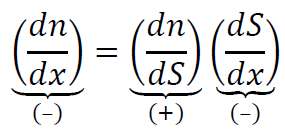
(4)
where x – human standard of living.
The first component on the right side of equation (4) (Bauman’s principle) It helps to reduce people’s sociality and thus provokes a massive breakdown of social ties.
Typical manifestations of Bauman’s principle are the destruction of the family and the institution of citizenship. For example, each family member lives by their own interests, which do not correlate in any way with the interests of other family members. This trend captures the inner circle – no one delves into the problems of their friends and family, does not show a desire to help them. At the same time, this situation is being transferred to the labor sphere – employers are not interested in the motivation of their employees, and those are indifferent to the interests of employers. Moral duty is perceived as a relic of the past, instead of a full–fledged family, people prefer temporary cohabitation, and human communication and the art of dialogue are disappearing from everyday practice.
With regard to the institution of citizenship, the same pattern is observed – from now on, the interests of an individual can no longer be associated with any particular society or with any particular territory. If an individual needs to leave this society and this country to improve their well–being, they can and even should do so. This choice is determined by the primacy of individuality over public interests and any national objectives. Thus, Bauman’s principle generates hypertrophied individualism, which automatically leads to cosmopolitanism and the loss of civic patriotism.
4. The iron law of welfare. By analogy with the iron law of oligarchy by R. Michels (Michels, 1915), the iron law of well–being was formulated in 2024: a person (and humanity) can exist only in a relatively narrow range of the level of material well–being – between some minimum and maximum boundaries (Balatsky, 2024b). It was also suggested that the upper limit of the “effective band” of material well–being is currently “breaking through”, when social unity is weakened, people are losing communication skills, and the social fabric is tearing in many directions.
The iron law of welfare can be formalized as follows:
 (5)
(5)
where, as it was before, x is the actual standard of living of a person; x* is the minimum allowable standard of living of a person; x** is the maximum allowable standard of living of a person; S is the level of sociality of an individual; the function S(x) has a parabolic shape with a maximum point.
The manifestations of the iron law of welfare are quite diverse: new mental illnesses of the 21st century – autism, narcissism, addiction, ludomania, gambling, etc. (Maenner et al., 2020); a critical decline in the responsibility of politicians; fascination with absurd and fake news in the media, etc. (Balatsky, 2024b).
It is worth noting that such ideas about bilateral limitations in the development of systems are typical for modern science and have many analogies in various fields of knowledge. One of the most famous is the Goldilocks zone in astrobiology, which is a circumstellar habitable zone in which a planet is located at such a distance from its star that its surface is neither too cold nor too hot for water and life to exist on it [3]. With regard to the spread of relatively developed cultures on Earth, there is the concept of happy latitudes, on the territory of which all the early civilizations of mankind arose and developed; today, this zone includes the strip of Eurasia between the 25th and 45th parallels of northern latitude (Sachs, 2022). The Goldilocks zone also appears in the theory of biological evolution. For example, for Liolaemus lizards, speciation rates are highest in low latitudes (<35°south latitude) and at medium altitudes (~1000 m), while extinction rates are highest in higher latitudes (>35° south latitude) and at high altitudes (>2000 m); designated Goldilocks zone It is optimal for population diversification, due to the combination of a complex terrain that promotes speciation during periods of climatic change and a relatively temperate climate that protects species from extinction (Skeels et al., 2023). The continuation of the logic of the Goldilocks zone is its transfer to the sphere of human physiology. For example, it has been found that the optimal dose of physical activity (Goldilocks zone) for people over 45 years of age is at least 150 minutes of moderate–intensity aerobic exercise per week or 75 minutes of high–intensity aerobic exercise per week, but no more than 4–5 hours of intense exercise per week (O’Keefe et al., 2018). Thus, the idea of an optimal range of life parameters permeates phenomena of any scale – from cosmic to physiological.
An important consequence of the iron law of well–being is that when living conditions are too poor, a person loses their personality and individuality, slipping into a primitive animal existence with the task of simple survival, whereas when living too well, sociality, collectivism and activity are destroyed in a person, which provokes the emergence of various forms of social autism. The latter circumstance brings us to an understanding of a simple but extremely important truth: as soon as a person stops fighting for their existence, they cease to be a human being.
5. J. Calhoun Law. Ethology has been an important source of understanding of human society for many years, one of the achievements of which is the so–called J. Calhoun Law. It often appears in the form of the “death squared” formula: the breakdown of social ties between individuals of a population leads to its social death, after which individuals lose their sense of existence and die out without offspring, which leads to the physical extinction of the population (Calhoun, 1973). Let us recall that this conclusion was obtained as a result of the large–scale experiment “Universe 25”, conducted by J. Calhoun in 1968–1972, its essence was to create a kind of paradise for the mouse population, where food, territory and building materials for nests were unlimited. After 4 years, 122 individuals who had passed the reproductive age remained in the pen, and the original paradise for mice ended in complete depopulation.
If n is the average actual reproductive capacity of individuals, i.e. the average number of offspring in a family, S is the level of sociality of the individual, and x is the actual standard of living (comfort) of an individual, then the Calhoun law can be represented as the following decomposition:
 (6)
(6)
The universality of the Calhoun law is that it reveals the algorithm for destroying any system: first, the systemic connections between the elements of the community, i.e. collective mechanisms, are broken and disrupted (the second multiplier of the right part (6)), and only after that the decomposition of individual elements of the system, i.e. individual entities, begins (the first multiplier of the right part (6)). The second stage inevitably comes by virtue of the very definition of the system as a way of existence of a multitude of individual elements.
An almost perfect reproduction of Calhoun’s experiment among humans took place, in particular, during the European colonization of the Polynesian islands. For instance, back in 1896, R.L. Stevenson described a two–step mechanism of depopulation of the natives of Oceania: the abolition by the colonists of old norms of behavior (a ban on men wearing skirts, a ban on many types of dancing, tattooing, and headhunting of representatives of other tribes; replacing the leader with a foreign governor, etc.) led to an artificial rupture of the original social ties and social disorientation of the aborigines, which caused them the deepest depression and apathy (i.e., contributed to the destruction of sociality as such), which led to their rapid extinction (Stevenson, 2005).
The two effects mentioned earlier, Bauman’s principle and the iron law of welfare, have already been “protected” in the Calhoun law. If at the lowest levels of life people become like animals with their primitive behavior, including spontaneous aggression (Lorenz, 2008), then at too high a level (“paradisiacal conditions”) various forms of personality desocialization are produced, followed by the disintegration of society and its subsequent extinction. In a somewhat stylized and hyperbolized form, the biological explanation of this property of human behavior may look like this: “The mechanism of thinking turned out to be costly and biologically questionable for the brain, therefore animals and humans in every possible way avoid using this property in a stabilized environment. However, there are some advantages in thinking when the stability of the environment is disrupted and social processes get out of control” (Savel’ev, 2024, p. 36).
In equation (6), the iron law of welfare sets the extreme values of the reproductive capacity of the population (at S→0 n→0), whereas within the band of acceptable values {x}, at a certain stage, Bauman’s principle begins manifesting itself (dS/dx<0).
The five effects considered have one thing in common – they generate depressive behaviors of people in “too good” living conditions. The simultaneous effect of these effects and the underlying mechanisms leads to the extinction of demographic and social activity, the weakening of the traditional institution of the family and the denial of ethical norms. In such conditions, social cohesion, altruism, patriotism and heroism become virtually unrealistic models of behavior, and this, in turn, eliminates the very basis for the manifestation of the nation’s passion. Thus, we get a dialectical contradiction of the historical process: the initial unity and cohesion of the nation lead to the emergence of passionarity, which serves as the basis for economic, technological and social progress, which at a certain stage of society’s development generates an excessively high standard of living for people, producing the destruction of individuals’ sociality and the extinction of passionarity.
Discussion of the results
The decline of Western civilization observed today is strictly in accordance with the scheme described in the figure. The erosion of the national language, the destruction of the religious and ethical code and the traditional family model is taking place in the richest countries of the world. Moreover, this trend has features of internationality and universality: similar processes are taking place in countries such as Japan, South Korea, Singapore, China, etc. Even a completely different cultural tradition of the East is being suppressed by the effect of growing prosperity. In this sense, the decline of passionarity is subject to a kind of diffusion due to the spread of Western standards of living. Due to this diffusion, some Western countries maintain an intellectual and technological level largely at the expense of migrants from poorer countries who have not yet established themselves on the upper plateau of the standard of living.
This requires a special discussion regarding Russia due to the fact that the idea of its nonalignment with Western culture and values is often heard in public discourse. However, this thesis seems extremely doubtful. This is evidenced by many facts, including some results of the impact of international sanctions against Russia on the work of Russian researchers. For instance, the series of sociological studies of the scientific community “Scientific policy of Russia (NAPOR)” 2022–2023 allowed establishing that among Russian experts there is a skeptical attitude toward the mobilization of science with an increase in emigration sentiments: only half of scientists adhere to pro–government sentiments and can potentially be usefully involved in solving scientific and technical problems, while the other half of the scientific community becomes at least a group of opponents; the youth wing of science is largely permeated with cosmopolitanism and does not represent an anti–crisis force (Gusev, Yurevich, 2024). Moreover, Russian scientists have been found to be highly sensitive to wage dynamics: a decrease in wages may lead to a reduction in the number of researchers by up to 80% (Gusev, Yurevich, 2025). Thus, the existential challenge that arose as a result of the conflict in Ukraine did not mobilize, but, on the contrary, divided the community of Russian researchers. There are no signs of the birth of passionarity among Russian scientists yet; Rather, we can talk about the opposite trend – the mental damage caused to the scientific community by sanctions caused depressive moods, and by no means the desire to resist adverse circumstances against all odds (Gusev, Yurevich, 2025).
The conditions of the extinction of passionarity in Russia have been fully fulfilled: a high rate of marriage breakdown and a low birth rate (Gurko, 2006); low religiosity and blurred ethical norms; the erosion of the Russian language. The same signs are typical for the developed countries of the West. This indicates that Russia, which has been striving to integrate into the Western community for 30 years, has developed cosmopolitan values and behaviors that are not typical for a united nation with a high degree of self–identification and a desire to overcome external pressure. This conclusion is obviously preliminary and requires the accumulation of a more extensive evidence (empirical) base.
We should note that the extinction of passionarity can occur in stages with some recurrent processes. For example, the main linguistic achievement of the Middle Ages was the spread of Latin as the language of the clergy and secular elite to all regions of the Christian world (Le Goff, 2018, p. 92). In Modern Times, this conquest of the West was lost with the simultaneous formation of new linguistic dominants until the creation of the global Anglo–Saxon world. Today, the disintegration of the West contributes to the loss of the hegemony of the English language. Thus, the ebbs and flows in the spread of linguistic, family and ethical institutions act as factors of sublimation of the passionate potential of nations.
The outlined vision of the mechanism of the extinction of passionarity unequivocally highlights the main “culprit” of this process – the growth of the welfare of the population. What goals should state elites set to avoid such a course of events if the growth of prosperity inevitably leads to the degradation and extinction of nations?
An exhaustive answer is impossible here, but a partial answer may be as follows. The exhaustion of the passionarity of the state (nation), as well as its collapse (disappearance), is a tragedy for this state, but it is not a tragedy for the entire human civilization. Every great state (empire, civilization) in world history, which reached its culmination and then disappeared, is of great importance insofar as with its disappearance its main achievements are preserved and other states and civilizations start based on them. It would be absurd to grieve over the collapse of the Roman Empire, because without it the modern world would simply be impossible. Without the collapse of the Russian Empire, there would have been no rise of the Soviet Union with its fantastic achievements. As a rule, the death of a great state is not a simple death, but a complex transformation into something else, and this is a positive historical process. In this regard, the fact of the extinction of passionarity should be treated in the same way as the death of states and nations themselves – this is inevitable, but it is a dual process that gives birth to a new one.
A more selfish and “tricky” question can be obviously posed: how can passion be maintained at the longest possible level? The answer also turns out to be banal – by supporting effective public administration. This is the only way to extend the life cycle of the state and the nation. And at this point, we again categorically depart from L.N. Gumilev’s initial position about the existence of a constant life expectancy of an ethnic group (nation), equal to about 1,500 years (Gumilev, 1992, p. 16). The current China continuously exists for about 5 thousand people. years old and demonstrates another grandiose passionate impulse. Even if there is a decline in passionarity later, it may become uncritical and allow the state to exist for an indefinite period of time. Conversely, the USSR lived for 70 years and disappeared irrevocably due to mistakes in public administration. The question boils down to the details, which become crucial. Thus, it is possible to control not the passionate impulse itself, but the critical passionarity on which the existence of the nation and the state depends. That should be the goal. It would be absurd to grieve over the collapse of the Roman Empire, because without it the modern world would simply be impossible. Without the collapse of the Russian Empire, there would have been no rise of the Soviet Union with its fantastic achievements. As a rule, the death of a great state is not a simple death, but a complex transformation into something else, and this is a positive historical process. In this regard, the fact concerning the extinction of passionarity should be treated in the same way as the death of states and nations themselves – this is inevitable, but it is a dual process that generates a new one.
The level of well–being in the described scheme is also subject to management, which makes it possible to prevent undesirable events in the country’s history. This is a subtle dialectical process that involves balancing a decent standard of living for the population against the background of a social model that requires people to make considerable efforts to achieve it. The combination of such aspects of development constitutes the sacred essence of the art of public administration. For example, the creation of the welfare state in Europe in the 20th century has led to its maximum degradation today, whereas in the United States the principle of social Darwinism has always been in effect, which in many ways allows the country to fight the extinction of passionarity.
Conclusion
The article attempts to explain the phenomenon of the fading passionarity of the nation, which is the reverse side of the passion impulse. For these purposes, the process of degradation of the institutional base of civilization is considered, the central link of which are three drivers of self–identification and consolidation of the nation – the ethical code of conduct, the traditional family model and a common language. These three elements of social life form the basis of any social community and underlie the potential of passionarity. At the same time, the degradation of these elements determines the fading ability of the nation to show passion in the form of generating “social exploits” and “social miracles”. For a better understanding of the evolution of the institutions of national language, family, and ethics, their features are revealed for three stages – the active, zombie, and null phases.
The central element of the logical scheme of the fading passionarity of the nation is the growth of the welfare of the population, which, paradoxically, weakens the sociality of individuals. Such an impact occurs through at least five key mechanisms: the demographic equivalent of G. Gossen’s law, the reproductive effect of replacing the number of children with their quality, Z. Bauman’s principle; the iron law of welfare and the law of J. Calhoun’s “death squared”. This is the dialectical contradiction between the development of human civilization and man himself: passionate impulses contribute to the launch of a spiral of economic, technological and social progress, which, in turn, eventually leads to a weakening of social ties of society and the extinction of the passionate potential of the nation. An important difference between this scheme and the mechanism of a passionate impulse is their temporal asymmetry: if the growth of passionarity occurs relatively quickly and abruptly, then its extinction is slow and smooth.
Currently, the developed Western countries provide a classic example of the decline of passionarity, but the available empirical evidence shows that Russia is largely affected by the same disease. Moreover, there is every reason to believe that no cultural and institutional features of the countries of the world are a means of combating the extinction of passionarity. At the same time, the uneven diffusion of passionaries across the planet leads to a weakening or acceleration of the process of weakening passionarity, which is the starting point for the periodic change of global capital centers.
REFERENCES
Balatsky E.V. (2015). The concept of antifragility of social systems and its applications. Obshchestvennye nauki i sovremennost’, 6, p. 116–130 (in Russian).
Balatsky E.V. (2022). Russia in the epicenter of geopolitical turbulence: The hybrid war of civilizations. Ekonomicheskie i sotsial’nye peremeny: fakty, tendentsii, prognoz=Economic and Social Changes: Facts, Trends, Forecast, 15(6), 52–78 (in Russian). DOI: 10.15838/esc.2022.3.4.82.3
Balatsky E.V. (2023). Institutional erosion and economic growth. Economic and Social Changes: Facts, Trends, Forecast,16(3), 81–101. DOI: 10.15838/esc.2023.3.87.4
Balatsky E.V. (2024а). Elites and counter–elites in P. Turchin’s theory of passionarity. Sotsial’noe prostranstvo=Social Area, 10(3), 1–20 (in Russian). DOI: 10.15838/sa.2024.3.43.1
Balatsky E.V. (2024b). The phenomenon of megacycles in the science fiction of Robert Heinlein. AlterEconomics, 21(1), 141–158 (in Russian). DOI: 10.31063/AlterEconomics/2024.21–1.9
Bauman Z. (2008). Tekuchaya sovremennost’ [Fluid modernity]. Saint Petersburg: Piter. 240 p.
Calhoun J. (1973). Death squared: The explosive growth and demise of a mouse population. Proceedings of the royal society of Medicine, 66(2), p. 80–88.
Ekimova N.A. (2024). The role of elites in the evolutionary process: conceptual foundations and modern interpretations. Ekonomicheskie i sotsial’nye peremeny: fakty, tendentsii, prognoz=Economic and Social Changes: Facts, Trends, Forecast, 17(2), p. 64–80 (in Russian). DOI: 10.15838/esc.2024.2.92.3
Ermolenko A. (2016). Search for the new ideas of Russian economic development from the perspective of the theory of passionarity. Terra Economicus, 14(2), p. 90–99 (in Russian). DOI: 10.18522/2073–6606–201614–2–90–19
Gibbon E. (1997). Istoriya upadka i razrusheniya Velikoi Rimskoi imperii. V7 t. [The History of the Decline and Fall of the Roman Empire]. Moscow: TERRA.
Gumilev L.N. (1992). Ot Rusi k Rossii: ocherki etnicheskoi istorii [From Rus to Russia: Essays on Ethnic History]. Moscow: Ekopros. 336 p.
Gumilev L.N. (2016). Etnogenez i biosfera Zemli [Ethnogenesis and Biosphere of the Earth]. Moscow: AIRIS–press. 560 p.
Gurko T.A. (2006). Aktual’nye problemy semei v Rossii [Current Problems of Families in Russia]. Moscow: Institut sotsiologii RAN. 223 p.
Gurko T.A. (2020). Theoretical approaches towards studying the transformation of the family institution. Sotsiologicheskii zhurnal=Sociological Journal, 26(1), 31–54 (in Russian).
Gusev A.B., Yurevich M.A. (2024). Lines of antagonism in the scientific community and the aggravating youth factor. Vestnik Rossiiskoi akademii nauk, 94(7), 646–657 (in Russian).
Gusev A.B., Yurevich M.A. (2025). Sanctions against Russian science: Mental–resource damage. Vestnik Rossiiskoi akademii nauk, 95(2), p. 55–68 (in Russian). DOI: 10.31857/SO869587325020075
Le Goff J. (2018). Stoit li rezat’ istoriyu na kuski? [Is It Worth Cutting the Story into Pieces?]. Saint Petersburg: Evraziya. 188 p.
Lorents K. (2008). Tak nazyvaemoe zlo [The So–Called Evil]. Moscow: Kul’turnaya revolyutsiya. 616 p.
Maenner M.J., Shaw K.A., Baio J., Washington A. (2020). Prevalence of autism spectrum disorder among children aged 8 years – autism and developmental disabilities monitoring network, 11 Sites, United States, 2016. MMWR Surveillance Summaries, 69(4), p. 1–12. DOI: 10.15585/mmwr.ss6904a1
Michels R. (1915). Political Parties. A Sociological Study of the Oligarchical Tendencies of Modern Democracy. N.Y.: Hearst’s International Library Company. 440 p.
Mommsen T. (2025). Istoriya Rima [The History of Rome]. Mosocw: AST. 480 p.
O’Keefe J.H., O’Keefe E.L., Lavie C.J. (2018). The goldilocks zone for exercise: Not too little, not too much. Missouri Medicine, 115(2), p. 98–104.
Pustovit T.N., Shlapak I.N. (2013). Conceptualization of the basic concepts of the passionate theory of ethnogenesis in the artistic system of D. Balashov’s cycle of novels “The Sovereigns of Moscow”. Uchenye zapiski Tavricheskogo natsional’nogo universiteta imeni V.I. Vernadskogo. Seriya “Filologiya. Sotsial’nye kommunikatsii”, 26(65), 4, part 2, 182–188 (in Russian).
Sachs J. (2022). Epokhi globalizatsii: geografiya, tekhnologii i instituty [The Ages of Globalization: Geography, Technology and Institutions]. Moscow: Izdatel’stvo Instituta Gaidara. 368 p.
Savel’ev S.V. (2024). Izmenchivost’ igenial’nost’ [Variability and Genius]. Moscow: VEDI. 144 p.
Schopenhauer A. (2011). Izrecheniya. Aforizmy zhiteiskoi mudrosti [Sayings. Aphorisms of Worldly Wisdom]. Minsk: Kharvest. 416 p.
Selifontova D.Yu., Levin Ya.A. (2023). FBI and the Ku Klux Klan: The main factors and features of countering extremism in the United States of the 1960s and 1970s. Samarskii nauchnyi vestnik, 12(1), 192–197 (in Russian). DOI: 10.55355/snv2023121211
Shuvalov V.I. (2019). E. Gibbon and the problem of Christianity as a socio–psychological phenomenon. Gumanitarnye nauki. Istoriya, 1 (49), 79–89 (in Russian). 10.21685/2072–3024–2019–1–7
Sinel’nikov A.B. (2018). Family and marriage: Crisis or modernization? Sotsiologicheskii zhurnal=Sociological Journal, 24(1), 95–113 (in Russian). DOI: 10.19181/socjour.2018.24.1.5715
Sinel’nikov A.B. (2019). Demographic self–regulation in terms of population growth and decline. Sotsiologicheskii zhurnal=Sociological Journal, 25(4), 84–92 (in Russian).
Sinel’nikov A.B. (2022). Braki i razvody v sovremennom obshchestve: sotsiologicheskii analiz [Marriages and Divorces in Modern Society: Sociological Analysis]. Moscow: Izdatel’stvo “Pero”. 395 p.
Skeels A., Esquerré D., Lipsky D., Pellissier L., Boschman L.M. (2023). Elevational goldilocks zone underlies the exceptional diversity of a large lizard radiation (Liolaemus; Liolaemidae). Evolution, 77(12), 26722686. DOI: 10.1093/evolut/qpad170
Spengler O. (2024). Zakat Evropy. Ocherki morfologii mirovoi istorii: geshtal’t i deistvitel’nost’ [The Decline of Europe. Essays on the Morphology of World History: Gestalt and Reality]. Moscow: Eksmo. 672 p.
Stevenson R.L. (2005). VYuzhnykh moryakh [In the South Seas]. Saint Petersburg: Propaganda. 448 p.
Taleb N.N. (2014). Antikhrupkost’. Kak izvlech’ vygodu iz khaosa [Antifragile: Things that Gain from Disorder]. Moscow: KoLibri, Azbuka–Attikus. 768 p.
Todd E. (2025). Porazhenie Zapada [The Defeat of the West]. Moscow: Izdatel’stvo AST. 320 p.
Toynbee A.J. (2011). Tsivilizatsiya pered sudom istorii. Mir i Zapad [Civilization before the Court of History. The World and the West]. Moscow: AST: Astrel’. 318 p.
Turchin P.V. (2024). Konets vremen [The End of Time]. Moscow: AST. 432 p.
Volkonskii V.A. (2024). On ideologies and their bearers: Revisiting the issue. Ekonomicheskie i sotsial’nye peremeny: fakty, tendentsii, prognoz=Economic and Social Changes: Facts, Trends, Forecast, 17(1), 41–59 (in Russian). DOI: 10.15838/esc.2024.1.91.2
Volkonskii V.A. (2025). The epochs of passionaries and conservatives and the image of the future in historical processes. Ekonomicheskie i sotsial’nye peremeny: fakty, tendentsii, prognoz=Economic and Social Changes: Facts, Trends, Forecast, 18(2), 39–56 (in Russian). DOI: 10.15838/esc.2025.2.98.2
Wilson E. (2020). Eusotsial’nost’: Lyudi, murav’i, golye zemlekopy i drugie obshchestvennye zhivotnye [Eusociality: Humans, Ants, Naked Mole Rats, and Other Social Animals]. Moscow: Al’pina nonfikshn. 158 p.
Wilson R.A. (2005). Kvantovaya psikhologiya [Quantum Psychology: How Brain Software Programs You and Your World]. Moscow: Izdatel’skii dom “Sofiya”. 208 p.
Yakimova Zh.V. (2016). The role of man in the cultural concepts of O. Spengler, A. Toynbee, P. Sorokin. Ekonomika i sotsium, 10(29), 922–927 (in Russian).
[1] Kamnev S.N. (2010). Historical concept of Edward Gibbon: Candidate of Sciences (History) dissertation abstract. Omsk: Omskii gosudarstvennyi universitet im. F.M. Dostoevskogo. 29 p.
[2] In this case, human sociality resembles the category of social capital, but it is not reduced to it, being a more voluminous concept. A similar but more specific concept of eusociality is discussed in detail in (Wilson, 2020). A more thorough definition of these categories does not make sense in this case.
[3] See: Sawe B.E. (2017). What is the Goldilocks Zone? Worldatlas, 12. Available at: https://www.worldatlas.com/articles/what-is-the-goldilocks-zone.html
Official link to the paper:
Balatsky E.V. The Extinction of Passionarity in E. Todd’s Demographic Concept // «Social Area», 2025, Vol. 11, No. 3, pp. 1–20.